

Feeling anxious about the volatile memory market? Sudden price hikes and supply shocks can disrupt your entire production plan. We understand the pressure.
The memory chip market in 2025 is trending towards continued price volatility and tightening supply for legacy products like DDR4, as major manufacturers shift capacity to newer, higher-margin technologies. Strategic sourcing and supply chain diversification will be essential.
The recent news about Micron’s dramatic price hikes has sent shockwaves through the industry, and procurement managers like you, David, are right to be concerned. This isn’t just random market noise; it’s a clear signal of a larger shift. To understand what this means for 2025 and beyond, we need to first dissect the immediate event and the market’s reaction. Let’s look at what’s really happening and how you can protect your supply chain.
Why did Micron suddenly raise memory chip prices and suspend quotes, and what was the market’s reaction?
You just heard Micron is raising prices and stopping quotes. Now your budget is at risk, and you can’t even secure parts for your production line.
Micron’s sudden price hike and quote suspension caused immediate panic, with distributors halting their own quotes. This move is likely driven by a strategic shift away from legacy DDR4 production and a desire to capitalize on a manufactured supply-demand imbalance.
As soon as the news broke, the reaction I saw from my network was immediate but cautious. The first thing that happened was that distributors and agents simply stopped quoting. Nobody wants to sell a part today that might be worth 30% more tomorrow. As one of my contacts in the distribution channel mentioned, everyone is in a "wait-and-see" mode. The few prices that did emerge confirmed the rumors. For example, 16G industrial-grade DDR4, which was around $21 in early September, saw its price jump by about 30%. The spot market prices, as is often the case, were even higher than the 20-30% increase for scheduled orders. Interestingly, the 8G DDR4 modules remained more stable due to a larger supply in the market. There are two main theories behind Micron’s move.
-
A True Supply-Demand Gap: Supply chain sources claim Micron is seeing demand forecasts that far outstrip their planned production. They are actively shifting capacity from older processes like DDR4 to newer, more profitable products.
-
A Financial Strategy: Others speculate this is a calculated move to bolster their numbers ahead of a financial report.
From my position, this looks like a classic sign of a market in transition. It’s a clear warning shot for anyone relying on these parts.
Is the DDR4 price surge a short-term blip or a long-term trend?
Are you worried if these DDR4 price hikes are temporary? Betting wrong could mean overpaying now or facing a critical shortage later. We can provide some clarity.
The DDR4 price surge is a long-term trend, not a short-term blip. Major manufacturers are strategically phasing out DDR4 production, creating a structural supply shortage that will keep prices high for the foreseeable future.
This latest price hike isn’t an isolated event. I’ve been tracking DDR4 prices closely all year, and the trend is clear. The surge started back in February and March. Then, in mid-June, after Micron announced a production halt, prices truly soared. I saw 8G modules jump from around $1.25 at the end of last year to nearly $8 after the halt. The 16G modules went through an even more dramatic rise. This recent announcement is simply an acceleration of that existing trend. The data shows that while there have been small corrections, the overall price has plateaued at a new, much higher level.
What this tells me, and what I advise my clients like you, David, is that DDR4 is entering its legacy phase. Demand from industrial and automotive sectors with long product lifecycles remains strong, but top-tier manufacturers are deliberately reducing supply to focus on what’s next. This isn’t a blip; it’s a fundamental supply chain realignment.
| Memory Type | Price (End of Last Year) | Price (Mid-Year, Post-Halt) |
|---|---|---|
| 8G DDR4 Module | ~$1.25 | ~$7.00 – $8.00 |
| 16G DDR4 Module | ~$2.88 | ~$17.00 – $25.00+ |
How are manufacturers’ strategic shifts affecting the memory supply chain?
Wondering why your trusted memory suppliers are suddenly unreliable? Their hidden strategic shifts are impacting your production lines. Let us show you what’s happening behind the scenes.
Major memory manufacturers are shifting production capacity away from older processes like DDR4 toward higher-profit products like HBM for AI and next-gen DDR5. This strategic pivot is creating a planned supply-demand imbalance for legacy components.
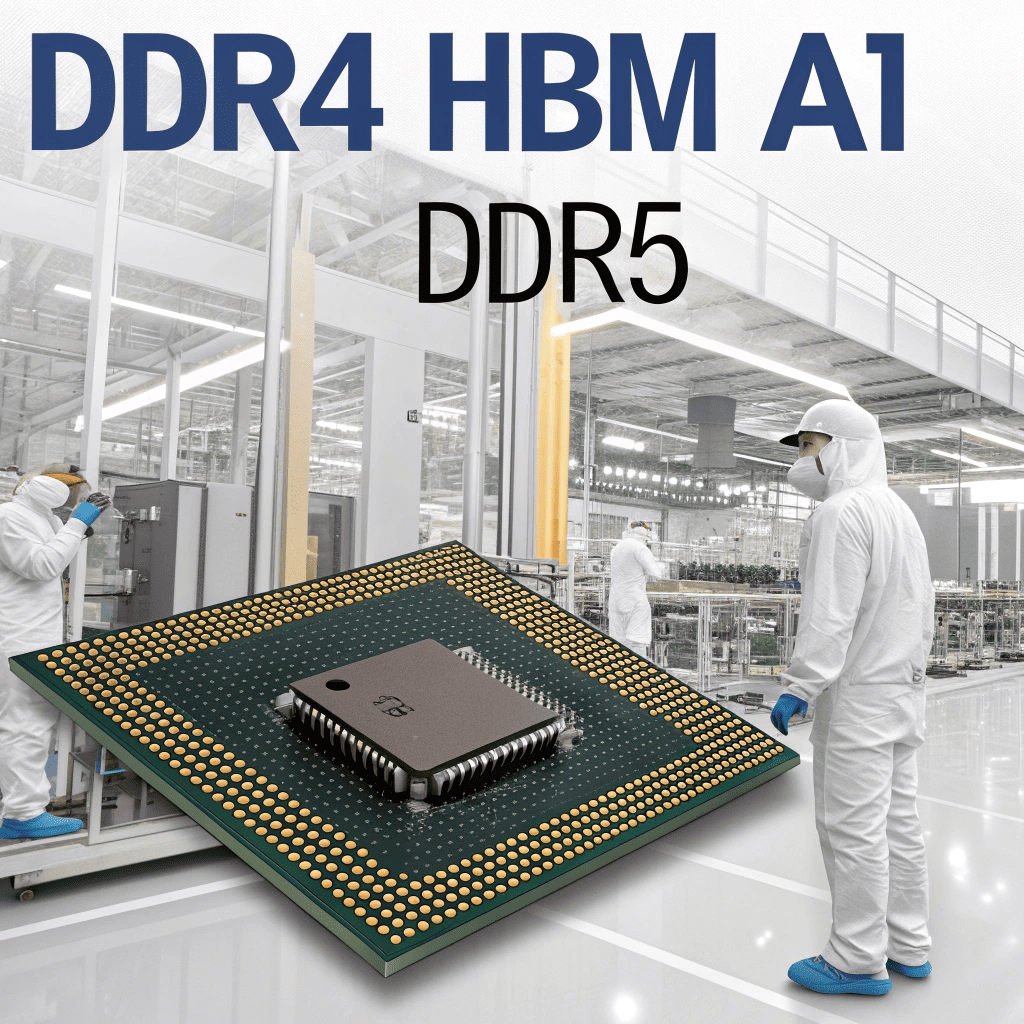
The "why" behind this volatility is purely strategic. For major manufacturers like Micron, the future profits are in High-Bandwidth Memory (HBM) for AI applications and the latest DDR5 for new consumer and server products. Continuing to dedicate valuable fab capacity to older, lower-margin DDR4 just doesn’t make financial sense for them. They are making a calculated business decision to manage the decline of their legacy product lines.
Micron is being the most aggressive and public about this strategy, but the entire industry is moving in this direction. You might have noticed that announcements from Samsung and SK Hynix to extend their DDR4 production didn’t cause a major market reaction. This is because the overall long-term trend is still a reduction in supply. For a procurement director like you, David, especially in the automotive sector where product lifecycles are very long, this is a huge red flag. It means you can no longer assume a stable, long-term supply from the original manufacturer for components you’ve used for years. The risk is shifting directly onto you.
What are effective strategies to counter this memory market volatility?
Tired of being at the mercy of the volatile memory market? Constant price hikes and shortages are stressful. There are concrete strategies to regain control of your supply chain.
To counter memory market volatility, you must implement a multi-faceted strategy: diversify your supplier base, partner with hybrid distributors/manufacturers, and proactively qualify alternative, pin-to-pin compatible components from reliable sources.
You are not helpless in this situation. You can take control. First, you must diversify. If you are single-sourced on Micron, you are exposed. You need pre-qualified options. The most powerful strategy, however, is to partner with a company that can offer both immediate solutions and long-term stability. This is where a hybrid partner like Hunt Electronics becomes invaluable.
As an independent distributor, we can navigate the chaotic global spot market to find the critical Micron parts you need right now to prevent a line-down crisis. But we don’t stop there.
Conclusion
The memory market is fundamentally shifting. Proactive, strategic supply chain management is now essential. A hybrid partner like Hunt Electronics provides both immediate sourcing and long-term manufacturing stability.

You may also interested in:

Hello world!
Welcome to WordPress. This is
Scan QR Code to Visit Our Website
Stay updated with the latest semiconductor industry news